What Does It Mean to Be Whole? A Practical Guide to Emotional and Personal Healing
Discover what it means to be whole, how emotional and inner healing work, and how self-integration leads to lasting personal wholeness and balance.
In our modern, fast-paced world, we are often encouraged to compartmentalize our lives. We have a professional persona, a social media presence, a family role, and a private internal world. While this might seem like an efficient way to manage various responsibilities, it frequently leads to a sense of fragmentation. We feel like a collection of disconnected parts rather than a unified being. This is where the concept of being whole becomes transformative.
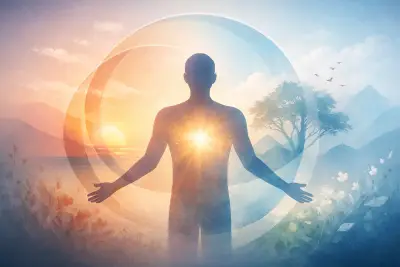
Personal wholeness is not about achieving perfection. It is not about a life without struggle or the absence of negative emotions. Rather, it is the state of self-integration—the process of bringing together the disparate parts of our psyche, history, and personality into a cohesive, functioning whole. When we pursue inner healing, we are essentially reclaiming the pieces of ourselves we have hidden, ignored, or rejected.
Understanding the Foundation of Being Whole
Being whole is a state of internal alignment. It means that your thoughts, emotions, values, and actions are in harmony. Many of us live in a state of “cognitive dissonance,” where we act in ways that don’t align with our true beliefs or feel emotions we don’t allow ourselves to express. This misalignment creates a constant, underlying stress that drains our energy and dims our joy.
The journey toward wholeness begins with the realization that you are already complete, but perhaps layered over by years of societal conditioning, trauma, and coping mechanisms. Emotional healing is the process of peeling back those layers to rediscover the core of your being. It is a transition from surviving to thriving.
The Essential Role of Emotional Healing
Emotional healing is the cornerstone of any effort toward personal wholeness. We all carry “emotional baggage”—unresolved feelings from past experiences that continue to influence our present-day reactions. These could be small slights from childhood or significant traumatic events. Regardless of the scale, if an emotion wasn’t fully processed at the time it occurred, it remains stuck in our system.
When we ignore these emotional wounds, they don’t disappear. Instead, they manifest as anxiety, depression, chronic fatigue, or even physical illness. Healing these wounds involves acknowledging the pain, allowing ourselves to feel it without judgment, and eventually releasing its grip on our identity. This is a vital component of the Being Whole Video Course, which provides structured exercises to navigate these complex internal landscapes.
Inner Healing: Moving Beyond the Surface
While self-care routines like bubble baths and gym memberships are beneficial, inner healing goes much deeper. It involves addressing the “root causes” of our behaviors. For instance, if you struggle with people-pleasing, inner healing asks: “What part of me feels unsafe saying no?” or “What past rejection am I trying to avoid repeating?”
By engaging in deep inner work, you begin to heal the “inner child”—that part of your subconscious that still holds onto the fears and needs of your younger self. As you provide that part of yourself with the validation and safety it lacked, you naturally move toward self-integration.
- Journaling for clarity and emotional release.
- Meditation to observe thoughts without attachment.
- Shadow work to integrate the parts of yourself you’ve disowned.
- Somatic experiencing to release trauma stored in the body.
The Mechanics of Self-Integration
Self-integration is the practical application of wholeness. It is the act of “gathering your parts.” Throughout life, we often develop “sub-personalities” or “masks” to survive different environments. We might have a “tough” mask for work and a “compliant” mask for home. Integration means you no longer need these masks to feel safe. You become the same person in every room.
This process requires radical honesty. It means looking at your flaws, your mistakes, and your “darker” impulses with curiosity rather than shame. When you integrate your shadow—the parts of yourself you find “unacceptable”—they lose their power to control you from the subconscious. You become a more authentic, grounded version of yourself.
How Personal Wholeness Impacts Your Life
What happens when you finally start feeling whole? The shifts are both subtle and profound. First, your decision-making becomes easier because you are no longer fighting internal battles between what you “should” do and what you “want” to do. Your intuition becomes clearer, serving as a reliable compass.
Second, your relationships improve. When you are not looking for others to “complete” you or fill the holes left by unhealed wounds, you can love from a place of abundance rather than lack. You set healthier boundaries because your self-worth is no longer dependent on external validation.
Third, your resilience increases. Life will always throw challenges your way, but when you are integrated, you have a solid foundation to return to. You don’t “break” under pressure; instead, you bend and return to your center. If you are ready to build this foundation, the Being Whole Video Course is specifically designed to guide you through each stage of this transformation.
Practical Steps to Start Your Healing Journey
The path to being whole is a marathon, not a sprint. It requires patience and a commitment to showing up for yourself every day. Here is a practical framework to begin:
- Practice Presence: Spend at least 10 minutes a day in silence. Observe your internal weather. Are you anxious? Peaceful? Frustrated? Name the feeling without trying to change it.
- Identify the Fragments: List the areas of your life where you feel you’re “faking it.” These are the areas where integration is most needed.
- Seek Guided Transformation: Sometimes, the internal terrain is too difficult to navigate alone. Using a structured resource like the Being Whole Video Course can provide the roadmap you need to stay on track.
- Cultivate Self-Compassion: Treat yourself with the same kindness you would offer a dear friend. Healing cannot happen in an environment of self-criticism.
The Science and Spirituality of Wholeness
Interestingly, modern psychology and ancient spiritual wisdom both emphasize the importance of wholeness. In psychology, Carl Jung spoke extensively about “individuation”—the process of becoming an indivisible whole. In neuroscience, we talk about “neural integration,” in which different parts of the brain (such as the emotional limbic system and the rational prefrontal cortex) communicate effectively.
Spiritually, many traditions view wholeness as our natural state, often obscured by the “ego.” Whether you approach this from a scientific or spiritual perspective, the goal remains the same: to live a life that is unfragmented and deeply purposeful.
Common Obstacles to Personal Wholeness
Why isn’t everyone whole? Because the process is uncomfortable. It requires us to face the very things we’ve spent years running away from. Common obstacles include:
Fear of Change: Even if our current state is painful, it is familiar. Stepping into wholeness means leaving behind old identities that no longer serve us.
Societal Pressure: We live in a culture that prizes “doing” over “being.” Taking time for inner healing can feel “unproductive” in a society obsessed with hustle.
Lack of Tools: Many people want to heal but simply don’t know how. They get stuck in the “loop” of their thoughts. This is exactly why the Being Whole Video Course was created—to bridge the gap between the desire for healing and the practical “how-to.”
Conclusion: The Choice to Be Whole
Ultimately, being whole is a choice. It is a choice to stop running, to stop hiding, and to start embracing the full spectrum of your human experience. It is the most rewarding work you will ever do, as it unlocks a level of peace and power that cannot be found in the external world.
If you are tired of feeling disconnected and are ready to embark on a journey of true self-integration, don’t wait for a “perfect” time. The path to personal wholeness starts with a single step toward yourself. Take that step today by exploring the Being Whole Video Course and giving yourself the gift of a unified, vibrant life.