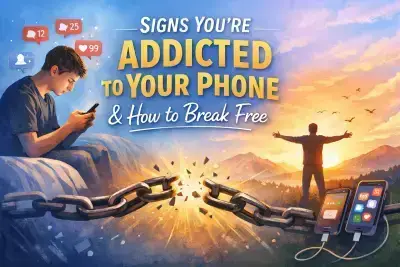
Disconnect to Reconnect: Why Digital Detox Is Essential for Mental Health
Learn why disconnecting from screens improves mental health, reduces anxiety, and restores focus through a practical digital detox.
We live in a world that never stops buzzing. Notifications, messages, endless feeds, emails, and alerts compete for your attention every waking minute. What once felt like convenience has quietly turned into overload. If you feel mentally exhausted, unfocused, anxious, or constantly “on edge,” you are not imagining things. This is the hidden cost of modern technology.
The idea of disconnect to reconnect is no longer a trendy wellness phrase. It is a survival strategy. A digital detox is one of the most effective ways to restore mental clarity, reduce stress, and rebuild a healthy relationship with technology.
This article breaks down exactly why stepping back from screens is essential for mental health, how screen addiction develops, what constant connectivity does to your brain, and how to reduce screen time without destroying your productivity or social life.
More importantly, you’ll learn how to turn disconnection into a sustainable habit instead of a short-lived experiment.
The Modern Digital Trap We Rarely Question
Technology itself is not the enemy. The problem is unconscious overuse. Smartphones, social media, streaming platforms, and digital workspaces are designed to keep you engaged for as long as possible.
Every swipe, notification, and autoplay feature is engineered to hijack attention. Over time, this creates dependency. Many people check their phones dozens or even hundreds of times a day without realizing it.
This constant stimulation keeps the brain in a low-level state of stress. Even when nothing urgent is happening, your nervous system behaves as if something might happen at any moment.
This is where mental health and technology collide.
What Screen Addiction Really Looks Like
Screen addiction is not just about hours spent online. It is about loss of control and emotional dependence.
Common signs include:
- Feeling anxious or irritated when separated from your phone
- Checking your device first thing in the morning and last thing at night
- Difficulty focusing on tasks without digital stimulation
- Scrolling mindlessly even when tired or stressed
- Using screens to escape emotions instead of processing them
Unlike traditional addictions, screen addiction is socially normalized. Everyone is “always connected,” so the warning signs often go unnoticed until burnout hits.
How Constant Connectivity Affects Mental Health
The brain is not built for nonstop information intake. When you overload it, several things happen at once.
First, attention span shrinks. Your brain adapts to quick hits of novelty, making deep focus harder. Reading, thinking, and reflecting start to feel uncomfortable.
Second, anxiety increases. Notifications trigger small spikes of stress hormones. Over time, this keeps your nervous system constantly on alert.
Third, emotional regulation weakens. When you rely on screens to distract from discomfort, you lose the ability to sit with emotions and process them naturally.
These effects explain why excessive screen use is linked to anxiety, low mood, irritability, sleep problems, and chronic mental fatigue.
Why “Disconnect to Reconnect” Actually Works
When you disconnect from constant digital input, your brain finally gets space to breathe. This is not about isolation or quitting technology forever. It is about intentional pauses.
Disconnection allows:
- Your nervous system needs to calm down
- Your attention span to recover
- Your thoughts to slow and organize
- Your emotional awareness to improve
- Your creativity to resurface
This is why people often report feeling lighter, clearer, and more present after even a short digital detox.
You are not losing anything by disconnecting. You are reclaiming what constant connectivity has been quietly taking away.
The Myth That You Can’t Afford to Disconnect
One of the biggest mental blocks is the belief that disconnecting will make you less productive, less informed, or socially disconnected.
In reality, the opposite is true.
Most people are not productive because of technology. They are productive despite it. Notifications fragment attention. Multitasking drains mental energy. Endless content consumption replaces meaningful progress.
Learning to reduce screen time strategically increases focus, efficiency, and mental stamina.
You don’t need to disconnect from everything. You need to disconnect from what drains you without giving you value in return.
What a Digital Detox Is (And What It Is Not)
A digital detox is not about deleting all apps, moving to the woods, or rejecting modern life.
A healthy digital detox is:
- Intentional
- Flexible
- Personalized
- Sustainable
It focuses on awareness and boundaries rather than restriction and guilt.
The goal is not to reduce technology. The goal is better control.
Small Changes That Create Big Mental Shifts
You don’t need extreme measures to see results. Small, consistent changes compound quickly.
Examples include:
- No phone for the first 30 minutes after waking
- Turning off non-essential notifications
- Designated screen-free hours in the evening
- Keeping devices out of the bedroom
- Replacing passive scrolling with intentional use
These habits reduce mental noise and restore a sense of calm without disrupting daily responsibilities.
The Emotional Side of Disconnecting
One overlooked aspect of digital detox is the emotional discomfort it can cause. When screens disappear, unresolved thoughts and feelings surface.
This is not a failure. It is the point.
Distraction numbs discomfort. Disconnection reveals it. This creates space for reflection, self-awareness, and emotional processing.
Over time, people often report feeling more grounded, emotionally stable, and in control of their reactions.
Reconnecting With What Actually Matters
When you disconnect from constant stimulation, you reconnect with:
- Your thoughts
- Your values
- Your relationships
- Your body
- Your sense of purpose
Conversations become deeper. Moments feel fuller. Time feels slower and more intentional.
This reconnection is what makes digital detox so powerful for long-term mental health.
Why Most People Fail at Digital Detox
Most attempts fail because they rely solely on willpower.
People try to quit habits without understanding why they exist. They remove screens without replacing what screens provided: stimulation, escape, structure, or comfort.
Without a framework, old patterns return quickly.
This is why structured guidance matters.
A Smarter Way to Disconnect and Reconnect
If you want a practical, realistic approach to digital detox, structured support makes the difference.
The Disconnect To Reconnect Video Upgrade is designed to guide you through this process step by step.
Instead of vague advice, it helps you:
- Understand your personal screen habits
- Identify emotional triggers behind overuse
- Build healthier digital boundaries
- Create routines that support mental clarity
- Reconnect with focus, presence, and balance
This is not about restriction. It is about alignment. Technology becomes a tool again, not a master.
How Digital Detox Improves Long-Term Mental Health
Over time, consistent disconnection leads to measurable benefits.
People often experience:
- Lower anxiety levels
- Improved sleep quality
- Better focus and memory
- Stronger emotional resilience
- Greater life satisfaction
These changes don’t come from quitting technology. They come from using it consciously.
Technology With Intention, Not Compulsion
The future is not screen-free. It is intention-driven.
Learning how to engage with technology without losing yourself is one of the most important mental health skills of our time.
When you choose to disconnect, even briefly, you give your mind permission to reset.
When you reconnect, do so with clarity rather than compulsion.
Final Thoughts
Digital overload is not a personal failure. It is a predictable outcome of a system designed to capture attention.
The solution is not guilt or extremes. It is awareness, structure, and intention.
Choosing to disconnect to reconnect is choosing mental health, clarity, and control in a world that profits from distraction.
If you are ready to move beyond awareness and build sustainable habits, the Disconnect To Reconnect Video Upgrade offers a guided path toward a healthier relationship with technology.
You don’t need more apps. You need more presence.