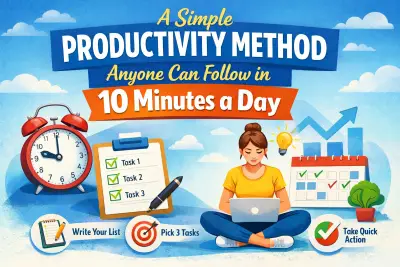
A Simple Productivity Method Anyone Can Follow in 10 Minutes a Day
In a world that constantly demands our attention, the quest for a simple productivity system has never been more relevant. We are bombarded with notifications, emails, and an endless stream of tasks that seem to multiply the moment we look away. For many, the idea of productivity feels like a complex puzzle that requires expensive software or a PhD in time management to solve. However, the truth is that the most effective ways to manage your life are often the most straightforward.
If you have been searching for productivity advice for beginners, you are likely overwhelmed by the sheer volume of options. You might have tried complex planners or habit-tracking apps only to find that they take up more time than they save. This article is designed to cut through the noise. We are going to explore a method that requires just ten minutes of your day but yields hours of regained focus. This is about how to be more productive without burning out, focusing on work smarter, not harder, principles that anyone can implement immediately.
The Myth of the 24-Hour Hustle
Before we dive into the methodology, we must address the “hustle culture” myth. Many people believe that to be productive, you must be working every waking second. This approach is not only unsustainable but also counterproductive. True productivity is not about doing more things; it is about doing the right things. This is especially true when considering time management for busy people who already feel stretched to their limits.
When we try to do everything, we end up doing nothing well. We lose our focus and productivity declines as “decision fatigue” sets in. By the time we reach the middle of the afternoon, our brains are fried, and we find ourselves scrolling through social media just to escape the pressure. To stop procrastinating, we need a system that reduces the friction between thinking about work and actually doing it. That is where easy productivity methods come into play.
The 10-Minute Daily Productivity Routine
The core of this system is a 10-minute ritual performed at the end of each workday or right before you go to bed. This routine sets the stage for the following day, ensuring you wake up with clarity rather than confusion. When you have a clear roadmap, you eliminate the morning scramble, which is the primary cause of procrastination for most people.
This routine is broken down into three distinct phases:
- The Brain Dump (3 Minutes)
- The Rule of Three (4 Minutes)
- The Environment Reset (3 Minutes)
If you find these concepts intriguing and want a deeper dive into visual implementation, the Simple Productivity Video Course offers step-by-step guidance on mastering these daily productivity habits.
Phase 1: The Brain Dump
One of the biggest enemies of focus and productivity is “open loops.” These are the half-remembered tasks, ideas, and worries circling in your mind. “I need to call the plumber.” “Don’t forget the 2 PM meeting.” “I should start that report.” When these loops stay in your head, they consume mental RAM, leaving you feeling anxious and scattered.
Spend the first three minutes of your 10-minute block writing down everything on your mind. Don’t worry about organization or priority yet. Just get it out of your head and onto paper or a digital note. This simple act of offloading information provides immediate psychological relief and allows your brain to transition into a rest state, which is vital for long-term work smarter, not harder success.
Phase 2: The Rule of Three
Once your list is in front of you, it is time to apply a filter. Most people fail at productivity because their “To-Do” lists are 20 items long. This is a recipe for failure. Instead, identify the three most important tasks that will move the needle for you tomorrow. These are your “Non-Negotiables.”
Why three? Three is a manageable number that provides a sense of accomplishment without being overwhelming. If you finish your three tasks early, you can always go back to your brain dump list. However, if you only finish those three, your day is still a success. This is the ultimate time management strategy for busy people because it forces them to prioritize.
For those who struggle to identify which tasks are truly important, the Simple Productivity Video Course provides frameworks for identifying high-leverage activities so you stop wasting time on “busy work.”
Phase 3: The Environment Reset
The final three minutes are dedicated to your physical or digital workspace. A cluttered desk leads to a cluttered mind. If you walk into your office tomorrow morning and see empty coffee cups, scattered papers, and 40 open browser tabs, your brain will immediately feel a sense of low-level stress.
Close the tabs you aren’t using. File the papers. Clear the trash. Prepare your tools so that when you sit down tomorrow, the only thing in front of you is the first of your “Three Non-Negotiables.” This is one of those easy productivity methods that sounds too simple to work, yet it is the secret weapon of high achievers everywhere.
How to Stop Procrastinating for Good
Procrastination is rarely about laziness; it is usually about fear or overwhelm. When a task feels too big, we avoid it. By using this 10-minute method, you break the cycle of overwhelm. You aren’t “starting a project” tomorrow; you are simply following the list you made for yourself the night before.
To stop procrastinating, you must lower the “activation energy” required to start. When you have already decided what to do and cleared the path to do it, the resistance vanishes. You are no longer wondering how to be more productive; you are simply executing a plan. Consistent daily productivity habits are the only way to build the momentum needed to achieve big goals.
Building Focus and Productivity in a Distracted World
Focus is a muscle. The more you use it, the stronger it gets. However, we live in an environment designed to atrophy that muscle. To reclaim your focus, you must create boundaries. During your work blocks for your “Rule of Three” tasks, use techniques like the Pomodoro method or “Deep Work” sessions where your phone is in another room, and all notifications are silenced.
This simple productivity system works because it respects the limitations of human attention. We cannot be “on” all the time. By dedicating a small window of time to planning, we allow the rest of our time to be spent either in deep focus or deep relaxation. This balance is the hallmark of productivity for beginners who want to see results quickly without the stress of traditional “hustle” methods.
Why You Need a Simple Productivity System
Complexity is the enemy of execution. If your system requires you to tag every item, set multiple reminders, and sync across five different devices, you will eventually stop using it. This is why we advocate for the 10-minute method. It is robust because it is simple. It survives the “bad days” when you are tired or unmotivated.
If you are looking to professionalize your approach and gain even more time back in your week, we highly recommend checking out the Simple Productivity Video Course. It expands on these concepts, providing templates and advanced workflows that are easy to follow yet deliver professional-grade results.
Work Smarter Not Harder: The Long-Term View
Ultimately, your goal shouldn’t be to get more work done. Your goal should be to get your work done so you can enjoy your life. Whether that means more time with family, pursuing a hobby, or simply having a quiet evening to yourself, productivity is the vehicle that gets you there. When you master these easy productivity methods, you stop being a slave to your inbox and start being the architect of your day.
Start tonight. Take ten minutes. Dump your brain, pick your three, and clean your desk. You will be amazed at how much lighter you feel tomorrow morning. Over time, these daily productivity habits will compound, leading to massive shifts in your career and personal well-being.
Summary of the 10-Minute Method
- Gather your tools (pen and paper or a simple digital app).
- Clear the mental clutter with a 3-minute brain dump.
- Select exactly 3 priority tasks for the next day.
- Tidy your workspace to remove visual distractions.
- Commit to starting the first task immediately upon beginning work.
For a complete transformation in how you handle your schedule, the Simple Productivity Video Course is the perfect companion to this blog post, offering the structure and motivation needed to make these changes permanent.