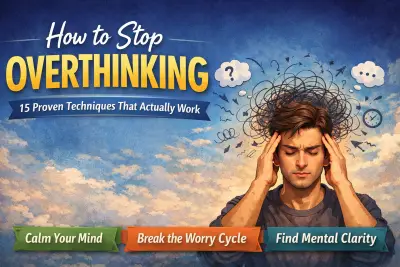
How to Stop Overthinking: 15 Proven Techniques That Actually Work
Learn how to stop overthinking with 15 proven techniques to calm racing thoughts, reduce overthinking anxiety, break negative thought patterns, and regain mental control.
Overthinking can feel like being trapped inside your own mind. One small worry turns into a spiral of doubt, anxiety, and mental exhaustion. If you have ever found yourself lying awake at night replaying conversations, worrying about the future, or feeling overwhelmed by racing thoughts, you are not alone. Millions of people struggle with overthinking anxiety every day, but the good news is that it is possible to regain mental control and experience peace again.
This in-depth guide will show you exactly how to stop overthinking using 15 proven techniques that are backed by psychology, neuroscience, and practical experience. You will also learn how negative thought patterns form, why racing thoughts are so hard to shut off, and how you can retrain your brain to respond differently. Along the way, you will discover a powerful resource called Overcoming Overthinking – Take Back Control Of Your Mind – PLR Bundle that can help accelerate your journey toward clarity and emotional freedom.
What Is Overthinking and Why Does It Happen?
Overthinking is the habit of analyzing, worrying, and replaying situations in your mind long after they have passed or before they have even happened. It is closely linked to overthinking anxiety, where your brain becomes stuck in a loop of fear-based predictions and self-criticism.
When you overthink, your mind tries to protect you by scanning for danger, mistakes, or potential problems. Unfortunately, this survival mechanism often backfires. Instead of helping you, it creates racing thoughts, tension in your body, and a constant feeling of being on edge.
Negative thought patterns are at the core of overthinking. These patterns include catastrophizing, assuming the worst, second-guessing yourself, and constantly questioning your decisions. Over time, they become automatic, which makes mental control feel almost impossible.
How Overthinking Affects Your Life
Overthinking does not just happen in your head. It affects every area of your life. It can damage your relationships, lower your confidence, and make simple decisions feel overwhelming. You may find yourself stuck in analysis paralysis, unable to move forward because you are afraid of making the wrong choice.
Overthinking anxiety also puts stress on your nervous system. When your brain is constantly on high alert, your body stays in fight-or-flight mode. This can lead to fatigue, headaches, digestive issues, and difficulty sleeping. Learning how to stop overthinking is not just about peace of mind; it is about protecting your overall health.
15 Proven Techniques to Stop Overthinking
The following techniques are designed to help you break free from racing thoughts, regain mental control, and create healthier thinking habits. You do not need to use all of them at once. Even practicing a few consistently can make a dramatic difference.
1. Become Aware of Your Thoughts
You cannot change what you do not notice. The first step in learning how to stop overthinking is awareness. Pay attention to what you are thinking and how often your mind jumps to worst-case scenarios.
When you notice a negative thought pattern, simply label it. You might say to yourself, this is overthinking or this is anxiety talking. This small shift creates distance between you and your thoughts, making them easier to manage.
2. Write Your Thoughts Down
Journaling is one of the most effective ways to slow down racing thoughts. When your worries are stuck in your head, they feel bigger and more overwhelming. Writing them down puts them in perspective.
Set aside five to ten minutes each day to write whatever is on your mind. You do not need to be poetic or organized. Just let your thoughts flow. This simple habit can dramatically reduce overthinking anxiety.
3. Challenge Negative Thought Patterns
Most overthinking is based on assumptions rather than facts. When you catch yourself worrying, ask yourself a few simple questions. Is this thought true? What evidence do I have? What is a more balanced way to see this situation?
By questioning your negative thought patterns, you weaken their power and begin to rebuild mental control.
4. Practice Mindful Breathing
Your breath is one of the fastest ways to calm your nervous system. When racing thoughts take over, slow, deep breathing sends a signal to your brain that you are safe.
Try inhaling slowly through your nose for four seconds, holding for four, and exhaling for six. Repeat this several times until you feel your body relax.
5. Limit Information Overload
Constant exposure to news, social media, and notifications fuels overthinking. Your brain was not designed to process endless streams of information.
Set boundaries around your screen time and give your mind space to rest. This simple change can significantly reduce overthinking anxiety.
6. Focus on What You Can Control
A major cause of overthinking is trying to control things that are out of your hands. Shift your focus to what you can influence, such as your actions, your responses, and your habits.
This mindset shift strengthens mental control and reduces unnecessary worry.
7. Use a Time Limit for Worry
Instead of trying to stop worrying completely, give yourself a specific time to think about your concerns. For example, set aside 15 minutes each day as worry time.
When racing thoughts show up outside that window, remind yourself that you will think about them later. This trains your brain to stop overthinking on command.
8. Move Your Body
Physical activity is a powerful way to clear your mind. Walking, stretching, or exercising helps release built-up stress and interrupts negative thought patterns.
Even a short walk can reset your mental state and reduce overthinking anxiety.
9. Practice Self-Compassion
Many people overthink because they are too hard on themselves. Treat yourself with the same kindness you would offer a friend.
When you make a mistake, remind yourself that it is part of being human. This reduces self-criticism and supports healthier thinking.
10. Use Visualization
Imagine placing your worries on leaves floating down a stream. Watch them drift away. Visualization techniques like this help you detach from racing thoughts and regain mental control.
11. Create a Daily Routine
Structure provides stability for your mind. When your day has predictable rhythms, your brain feels safer and less likely to spiral into overthinking.
Simple routines like regular meals, sleep times, and exercise can have a powerful calming effect.
12. Reduce Caffeine and Sugar
Stimulants like caffeine can increase anxiety and racing thoughts. Pay attention to how your body reacts to what you consume.
Reducing these triggers can make it much easier to stop overthinking.
13. Learn Cognitive Reframing
Cognitive reframing means looking at a situation from a new angle. Instead of seeing a problem as a disaster, try viewing it as a challenge or an opportunity to grow.
This technique helps break negative thought patterns and promotes mental control.
14. Get Support and Guidance
Sometimes you need more than simple tips. Having structured guidance can make a big difference. The Overcoming Overthinking – Take Back Control Of Your Mind – PLR Bundle offers tools, exercises, and step-by-step strategies designed to help you overcome overthinking anxiety and build lasting clarity.
This bundle is especially helpful if you want a complete system for changing how you think rather than just temporary relief.
15. Practice Consistency
Learning how to stop overthinking is not about finding a quick fix. It is about practicing new habits until they become second nature. Be patient with yourself and keep applying these techniques.
Over time, your brain will learn that it no longer needs to stay in constant worry mode.
Why a Structured Program Makes a Difference
While individual techniques are powerful, many people find that having a clear roadmap makes the process much easier. A structured resource like Overcoming Overthinking – Take Back Control Of Your Mind – PLR Bundle provides guided lessons, exercises, and practical tools that take the guesswork out of personal growth.
Instead of wondering what to do next, you follow a proven framework that supports long-term change.
Building a Healthier Relationship with Your Mind
Overthinking is not a flaw in your character. It is a habit that can be changed. By understanding how your brain works and applying the right techniques, you can transform racing thoughts into calm awareness.
Every time you choose to challenge a negative thought pattern or focus on what you can control, you strengthen your mental control. With practice, your mind becomes a place of clarity instead of chaos.
Final Thoughts
Learning how to stop overthinking is one of the most valuable skills you can develop. It improves your relationships, your health, and your overall happiness. Whether you start with journaling, breathing exercises, or a complete program like Overcoming Overthinking – Take Back Control Of Your Mind – PLR Bundle, the key is to take action.
You deserve a mind that supports you rather than holds you back. With the right tools and consistent effort, freedom from overthinking anxiety is absolutely possible.